The junk removal business — providing paid collection, hauling, sorting, and responsible disposal or recycling of unwanted items including old furniture, appliances, construction debris, electronics, and general household clutter — is a rapidly emerging opportunity in Indian cities where urbanisation, rising consumerism, and increasing apartment living create a growing volume of waste that residents lack the means or time to dispose of properly.
India generates an extraordinary quantity of solid waste daily — municipal solid waste generation has grown consistently with urban population and income levels, while the informal recycling infrastructure that traditionally handled much of this waste struggles to keep pace with the volume, variety, and geographic dispersal of modern urban discards. This gap between waste generation and organised collection capacity creates the market opportunity that professional junk removal businesses can serve profitably.
1. Genuine and Growing Market Demand
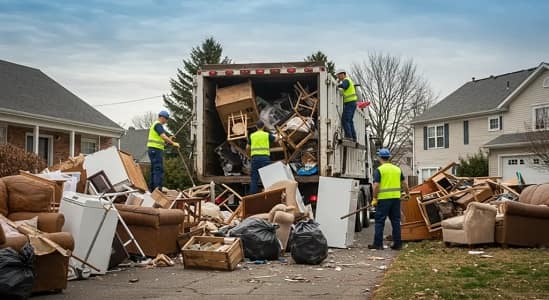
Indian households increasingly generate waste that exceeds the capacity of municipal services and the willingness of traditional kabadiwallas to collect — old mattresses, broken furniture, air conditioners beyond repair, construction debris from home renovations, and accumulated household clutter from apartment moves all require removal services that existing informal channels handle inefficiently or refuse entirely.
The explosion of e-commerce has simultaneously accelerated consumption rates and reduced the useful life expectation of products — shorter replacement cycles mean more frequent large-item disposal needs per household. As flat sizes in Indian cities shrink and storage space reduces, residents are increasingly motivated to pay for professional removal of items they simply cannot store, dispose of personally, or wait indefinitely for informal pickup.
2. Low Entry Barriers and Scalable Model
Starting a basic junk removal business in India requires relatively modest investment — a commercial vehicle for hauling, basic tools for disassembly of large items, and a mobile presence for customer acquisition. Initial capital requirements of ₹5–15 lakhs for a single vehicle operation make this one of the more accessible business start-up opportunities compared to manufacturing or technology businesses.
The business scales naturally with additional vehicles and crew — each incremental vehicle represents an independently profitable revenue unit that requires minimal additional overhead beyond the vehicle and crew costs. This linear scalability allows organic growth without complex infrastructure investment, making junk removal accessible to entrepreneurs starting with limited capital.
3. Multiple Revenue Streams Including Recycling Value
Unlike pure waste disposal businesses whose only revenue comes from service fees, junk removal operations can generate income from multiple directions simultaneously — service charges to customers for collection and hauling, resale of functional furniture and appliances to second-hand markets, recycling value from metals, electronics, and materials sold to scrap dealers, and disposal fees from construction sites that need debris removed on defined timelines.
This multi-revenue model — where collected materials generate value rather than only disposal cost — significantly improves business economics. A well-organised junk removal operation develops relationships with scrap dealers, furniture refurbishers, electronics recyclers, and charitable organisations that convert collected items into additional revenue streams beyond the primary customer service fee.
4. Competition from Established Kabadiwalla Network
India’s informal recycling economy is one of the world’s most efficient material recovery systems — the kabadiwalla network reaches virtually every Indian neighbourhood and household through door-to-door collection of recyclable materials. This informal network’s reach, pricing knowledge, and zero-overhead operation creates competition that formal junk removal businesses must differentiate against through superior service quality, broader item acceptance, scheduled reliability, and professional customer experience.
The key differentiation for formal junk removal businesses against kabadiwallas is service scope — the informal sector excels at recyclable material pickup but poorly handles large furniture removal, construction debris, hazardous materials, and time-sensitive commercial site cleanouts where professional reliability and documentation matter more than price minimisation.
5. Regulatory and Disposal Challenges
Responsible junk removal requires legally compliant disposal channels for different waste categories — electronic waste requires E-waste authorised recyclers, hazardous materials require licensed handlers, and bulk disposal requires municipal waste facilities or private dump yards whose availability and cost vary significantly by city. Navigating these regulatory requirements adds operational complexity and compliance cost that informal competitors ignore entirely.
Building relationships with authorised recyclers, E-waste processors, and municipal waste facilities before launching operations is essential groundwork that determines whether the business can operate legally and sustainably rather than creating disposal problems that ultimately cost more than the revenue they generated.
6. B2B and Event Cleanout Opportunities
Beyond residential customers, junk removal businesses generate higher-margin revenue from commercial clients — office relocations requiring complete furniture clearance, hotel renovation projects needing construction debris removal, restaurant closures needing kitchen equipment disposal, event organisers requiring post-event cleanup, and real estate developers needing site clearance before construction. These B2B clients offer larger single-transaction revenue, scheduled work that improves resource planning, and repeat business relationships worth cultivating systematically.
Corporate clients particularly value professional documentation, GST invoicing, and environmental compliance certificates that informal collectors cannot provide — creating a quality differentiation that justifies premium pricing for formal operators.
7. Technology Adoption Improves Customer Acquisition
App-based and online booking platforms have transformed service business customer acquisition — junk removal businesses that list services on urban services platforms, maintain active social media presence, and enable online scheduling and transparent pricing attract the urban professional customer segment that values convenience and predictability over negotiated informal arrangements. Digital presence significantly reduces customer acquisition cost compared to purely offline referral-based marketing.
Frequently Asked Questions (FAQs)
Q: How much can a junk removal business earn monthly in India?
A: A single-vehicle operation in a metro city completing 4–6 jobs daily can generate ₹1.5–3 lakhs monthly revenue. Multi-vehicle operations with commercial clients can achieve ₹5–15 lakhs monthly depending on scale and client mix.
Q: Do I need licences to start a junk removal business in India?
A: Business registration, GST registration, and vehicle permits are standard requirements. E-waste handling requires specific authorisation from State Pollution Control Boards. Construction debris hauling may require municipal permits in some cities.
Q: Which cities offer the best junk removal business opportunities?
A: Mumbai, Bengaluru, Delhi NCR, Pune, and Hyderabad — where rapid urbanisation, apartment living, and commercial real estate activity create consistent junk removal demand — offer the strongest market conditions.
Q: How do I compete with kabadiwallas in the junk removal business?
A: Focus on services that kabadiwallas do not offer — large furniture removal, complete house clearance, construction debris hauling, E-waste disposal, commercial site cleanouts, and scheduled same-day service. Price reflects these value additions.
Q: Is junk removal a seasonal business in India?
A: Summer months and festival seasons generate peak demand from relocating families and home renovation activity. Commercial clients provide more consistent year-round revenue that reduces seasonal income variability.