Health insurance and term insurance are not competing alternatives — they address entirely different financial risks and every Indian household needs both. The comparison is therefore less about which is better and more about understanding what each protects against, why both are necessary, and how to prioritise when budget constraints force sequencing.
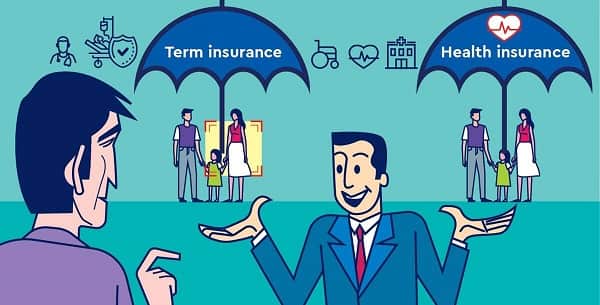
Quick Overview Table — Health Insurance vs Term Insurance
| Parameter | Health Insurance | Term Insurance |
| Risk Covered | Medical expenses — illness, hospitalisation | Death of income earner |
| Benefit Type | Reimburses medical bills | Lump sum to family on death |
| Premium Range | ₹8,000–₹30,000/year (family) | ₹8,000–₹20,000/year (₹1 crore cover) |
| Coverage Duration | Annual renewal | Fixed term — 10–40 years |
| When Claim Triggers | On hospitalisation or medical event | On policyholder’s death |
| Family Protection | Medical bills protection | Income replacement protection |
| Need Frequency | Multiple claims possible | Single lifetime claim |
| Both Necessary | Yes | Yes |
| Priority if Choosing One First | Health insurance first | Depends on dependents |
What Each Protects Against
Health insurance protects the entire family from the financial devastation of medical emergencies — hospitalisation, critical illness, surgeries, and ongoing treatment costs that can deplete lifetime savings in days. India’s medical inflation running at 12–14% annually means that even seemingly affordable hospitalisation costs are rising faster than income growth — making adequate health insurance increasingly financially critical.
Term insurance protects the financial future of dependents against the loss of the primary income earner’s life. For a household where one or two earning members support a family — parents, spouse, children — the death of the primary earner without adequate term cover creates financial devastation that no other safety net addresses. Term insurance is the mechanism through which families’ financial security survives the worst possible outcome.
Why Both Are Essential
Every household needs both products simultaneously because they address risks that occur independently. A medical emergency can devastate finances regardless of whether the policyholder lives or dies — health insurance addresses this. The death of an earning family member creates income loss that continues regardless of medical expenses — term insurance addresses this. No single product covers both risks adequately.
Prioritisation When Starting From Scratch
If genuine budget constraints force sequencing, most financial planners recommend health insurance first — because medical emergencies are statistically more frequent than premature death and the financial consequences of an uninsured hospitalisation are immediate and often irreversible through accumulated medical debt. Term insurance should follow as the second immediate priority — particularly for households with financial dependents where the income earner’s death creates catastrophic financial consequences.
Both should be in place within the first year of establishing a serious financial plan.
Frequently Asked Questions (FAQs)
Q: Can I have health insurance without term insurance?
A: You can, but this leaves your family exposed to income loss risk from your death. Complete financial protection requires both.
Q: Which is more important — health or term insurance?
A: Both are essential. Health insurance is marginally higher priority given the higher statistical frequency of medical events versus premature death.
Q: Does term insurance cover medical expenses?
A: No — term insurance pays only on death. It provides no coverage for medical expenses, hospitalisation, or critical illness treatment.
Q: Does health insurance replace the need for term insurance?
A: No — critical illness riders in health insurance provide lump sums for specific diagnoses but do not provide the comprehensive income replacement that dedicated term insurance delivers.
Q: What is the ideal combined premium for health and term insurance?
A: Financial planners typically recommend allocating 2–3% of annual income to insurance premiums covering adequate health and term coverage for the entire family.