Copper is one of the world’s most industrially essential metals — a reddish-brown conductor that forms the backbone of electrical systems, construction infrastructure, renewable energy technology, and modern manufacturing across every continent. Unlike gold, which derives much of its value from perception and store-of-wealth tradition, or silver, which straddles industrial and precious metal categories, copper’s investment case is rooted in something concrete and measurable — its indispensable role in the physical infrastructure of global economic activity.
But does that industrial indispensability make copper a good investment for individual investors? The answer is genuinely nuanced — copper offers compelling long-term growth arguments driven by energy transition demand, but it also carries significant risks from economic cyclicality, price volatility, and the complexity of accessing the commodity directly. This guide examines both sides of the copper investment case honestly to help you make informed decisions.
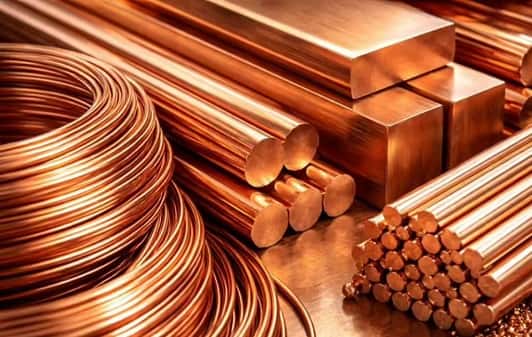
Understanding Copper’s Role in the Global Economy
Before evaluating copper as an investment, it is essential to understand why it matters economically. Copper is the world’s most widely used industrial metal after iron and aluminium — consumed in quantities that reflect the scale of modern civilisation’s electrical and mechanical infrastructure.
Every electric vehicle contains approximately 83 kilograms of copper — four times the amount in a conventional petrol car. Every wind turbine requires 3–5 tonnes of copper for its generators and cabling. Every solar farm, every data centre, every modern building, every grid upgrade, and every 5G network installation demands copper in quantities that scale directly with global economic development.
This creates a fundamental investment thesis — if the global economy grows, copper demand grows. If the green energy transition accelerates as climate commitments suggest it must, copper demand grows faster still. The International Copper Study Group estimates that global copper demand will roughly double by 2035 driven primarily by electrification and renewable energy infrastructure.
Why Copper Could Be a Good Investment
1. The Green Energy Transition Supercycle
The most compelling contemporary argument for copper as a long-term investment is the extraordinary structural demand that clean energy transition creates. Electrifying transportation, expanding renewable energy generation, upgrading power grids to handle distributed energy sources, and building the charging infrastructure for electric vehicles all require copper in volumes that analysts project will significantly outpace current production capacity.
Goldman Sachs, Bank of America, and several major commodity analysts have described copper as the new oil — the commodity whose availability and price will determine the pace of energy transition in ways that no other single material replicates. This structural demand shift differentiates copper’s investment case from purely cyclical commodity plays, arguing that even periods of economic slowdown may not suppress prices to historical lows if green investment programs continue accelerating globally.
2. Supply Constraints and Production Challenges
Copper mine development is extraordinarily capital-intensive and time-consuming — developing a new copper mine from discovery to production typically takes 10–15 years and requires billions of dollars in investment. The world’s highest-grade copper deposits are increasingly depleted, meaning new mines must process more ore per tonne of copper produced, raising production costs.
Chile and Peru — which together produce approximately 40% of global copper — face rising operational costs, water scarcity challenges, community opposition to new mine development, and increasing government royalty demands that collectively constrain new production growth. This supply-side tightness creates a structural pricing floor that pure cyclical commodities without equivalent supply constraints do not possess.
3. Proven Track Record of Long-Term Price Growth
Copper prices have appreciated significantly over decade-long investment horizons — rising from approximately $0.70 per pound in 2002 to over $4.00 per pound by 2023, representing extraordinary long-term value creation for patient investors. While the journey included severe downturns — copper fell below $2.00 during the 2008 financial crisis and again in 2015–2016 — long-term holders who maintained positions through volatility periods were rewarded substantially.
4. Inflation Hedging Characteristics
Like most physical commodities, copper prices tend to track or exceed inflation over extended periods — providing natural purchasing power protection that financial assets vulnerable to currency debasement cannot deliver reliably. During periods of sustained inflation such as 2021–2022, copper prices surged to record highs above $4.50 per pound as supply chains tightened and infrastructure spending accelerated simultaneously. For investors concerned about inflation eroding portfolio value, commodity exposure including copper provides meaningful protection.
5. Portfolio Diversification Benefits
Copper’s price movements have relatively low correlation with traditional equity and bond market performance over longer timeframes — adding commodity exposure to a portfolio reduces overall volatility through diversification that assets moving in synchrony cannot provide. During periods when equity markets decline due to tightening financial conditions, copper prices sometimes hold value better than financial assets — though this relationship is not consistent enough to rely upon as a hedge strategy in isolation.
Why Copper Might Not Be a Good Investment
1. Significant Price Volatility
Copper is one of the most volatile major commodities — capable of losing 30–50% of its value within a single year during economic downturns as industrial demand collapses faster than supply can adjust. The 2008 financial crisis saw copper fall from $4.00 to $1.25 per pound within months. The 2015–2016 China slowdown cut copper prices by over 40%. Investors who cannot tolerate extreme price swings over 1–3 year timeframes may find copper’s volatility psychologically and financially destructive regardless of its long-term merit.
2. Extreme Sensitivity to China’s Economy
Approximately 55–60% of global copper consumption occurs in China — making copper arguably the commodity most sensitive to a single national economy of any major investable asset. Chinese economic slowdowns, property sector crises (such as the 2021–2023 Evergrande-driven property market crisis), and manufacturing sector contractions all translate directly and immediately into copper price declines that can be severe and prolonged. Any investor in copper is implicitly taking a significant position on China’s economic health — a risk that requires careful consideration.
3. Complexity of Investment Access
Unlike gold, which can be easily purchased as bullion coins or bars through established dealer networks, physical copper investment is highly impractical — copper’s low value-to-weight ratio makes physical storage economically unviable for most individual investors. The primary investment routes — copper futures, copper ETFs, and copper mining company shares — each carry specific risks and costs beyond the pure metal price exposure that conceptually motivates the investment:
Copper futures require understanding of contract specifications, roll costs, and margin management that are genuinely complex for non-professional investors. Copper ETFs tracking futures experience contango-driven roll losses that erode returns relative to spot price movements. Copper mining company shares add company-specific risks — management quality, mine operational performance, jurisdiction political risk, and balance sheet leverage — to the underlying commodity price exposure.
4. Interest Rate Sensitivity
Copper is priced in US dollars and held globally as a traded commodity whose investment attractiveness responds to the real cost of capital. Rising interest rates — as demonstrated dramatically in 2022 — reduce copper’s attractiveness as a non-yielding commodity investment while simultaneously slowing economic activity that drives industrial copper demand. Periods of sustained high interest rates can therefore create double pressure on copper prices that financial asset investors do not face with equivalent severity.
How to Invest in Copper
Copper ETFs are the most accessible route for individual investors — funds like the Global X Copper Miners ETF (COPX) provide diversified exposure to copper mining companies rather than pure price exposure, while funds tracking copper futures more directly, like the United States Copper Index Fund (CPER), provide closer price tracking with roll cost disadvantages.
Mining Company Shares — investing in major copper producers like Freeport-McMoRan, Southern Copper, First Quantum Minerals, or Antofagasta provides leveraged exposure to copper prices alongside operational risks and potential dividends. In bull markets, mining company shares often outperform the underlying metal significantly due to operating leverage.
Commodity Futures provide direct price exposure for sophisticated investors but require active management, margin understanding, and roll strategy awareness that makes them inappropriate for most individual investors without professional guidance.
Diversified Commodity Funds that include copper alongside other metals, energy, and agricultural commodities provide portfolio diversification with lower single-commodity concentration risk — an appropriate starting point for investors new to commodity exposure.
Is Copper a Good Investment Right Now?
The honest answer depends on your investment timeframe, risk tolerance, and portfolio context. For long-term investors with a 10+ year horizon who believe in the green energy transition’s acceleration, copper presents a genuinely compelling structural growth argument that few other commodities can match with equivalent confidence. The supply-demand fundamentals supporting higher prices over the next decade are among the most well-documented and widely agreed upon in commodity analysis.
For short-to-medium term investors, copper’s economic cyclicality, China sensitivity, and interest rate vulnerability create risks that require careful entry point consideration. Buying copper exposure after major price corrections — when pessimism about industrial demand is highest — has historically produced substantially better outcomes than buying during periods of economic optimism and peak demand projections.
As a portfolio allocation rather than a primary investment, commodity exposure including copper in the range of 5–15% of portfolio value provides diversification benefits and inflation protection without over-concentrating in volatile single-commodity risk.
Frequently Asked Questions (FAQs)
Q: Is copper a better investment than gold?
A: Gold and copper serve different investment purposes. Gold is a store of value and safe-haven asset. Copper is an industrial growth play. For economic growth and energy transition exposure, copper may outperform gold significantly. For crisis protection and pure wealth preservation, gold is more reliable. Most sophisticated investors hold both.
Q: What drives copper prices up?
A: Strong global economic growth, accelerating electric vehicle adoption, renewable energy infrastructure investment, Chinese manufacturing expansion, and supply disruptions from major mining countries are the primary copper price drivers.
Q: What is the best way to invest in copper in India?
A: Indian investors can access copper through commodity derivatives on MCX (Multi Commodity Exchange), copper mining company shares available through international trading accounts, or commodity mutual funds and ETFs that include copper exposure.
Q: What is the long-term outlook for copper prices?
A: Most major commodity analysts project copper prices will rise significantly over the 2025–2035 period driven by clean energy transition demand and supply constraints. Goldman Sachs has projected copper prices reaching $15,000 per tonne within this period under strong transition scenarios.
Q: How much of my portfolio should be in copper?
A: Financial advisors generally suggest limiting single commodity exposure to 5–10% of total portfolio value. Copper within a broader commodity allocation of 10–15% provides meaningful diversification benefits without excessive concentration risk.