The food truck business has captured the imagination of Indian food entrepreneurs as the most accessible, most flexible, and most Instagram-friendly format for launching a food business without the enormous investment that traditional restaurants require. From Bengaluru’s tech park food truck parks to Mumbai’s coastal street food circuits and Delhi’s night market circuits, food trucks have carved a visible and commercially significant space in India’s food service landscape over the past decade — and the model continues expanding as urban food cultures evolve and real estate costs make permanent restaurant investment increasingly challenging.
Whether launching a food truck is the right business decision requires honest evaluation of both its genuine advantages over traditional restaurants and the specific operational, regulatory, and competitive challenges it presents in the Indian market context.
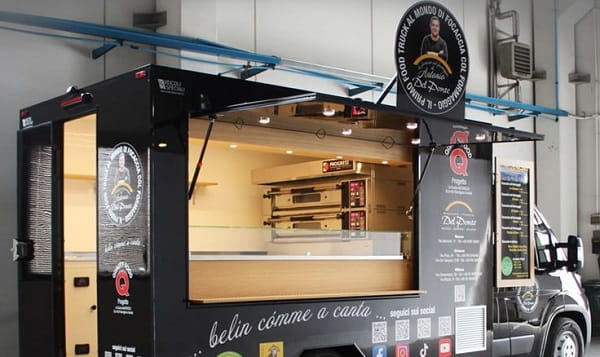
1. Significantly Lower Investment Than Traditional Restaurants
The most compelling advantage of the food truck model is its dramatically lower startup cost compared to restaurant format — a well-equipped food truck can be commissioned for ₹8–25 lakhs including vehicle customisation, commercial kitchen equipment, and initial working capital, versus the ₹30–100 lakhs that comparable restaurant spaces in Indian metro cities require between deposit, fit-out, and opening inventory.
This investment differential allows food entrepreneurs to test their concepts, build customer followings, and refine their menus without the financial exposure that a failed restaurant represents. The food truck’s mobility means an underperforming location can be abandoned for a better one without losing the fit-out investment that a restaurant closure would forfeit entirely.
2. Mobility Allows Location Optimisation
A food truck’s ability to move to wherever customers are — festivals, sporting events, corporate campuses, wedding ceremonies, night markets, and weekend bazaars — creates revenue opportunities that fixed restaurants cannot access. Event catering, corporate cafeteria contracts, and festival appearances represent high-volume, high-revenue days that supplement regular location income and provide business resilience against slow weekdays that restaurant formats must absorb as fixed cost periods.
Seasonal location strategy — moving to coastal areas in winter, university areas during academic terms, and festival areas during peak celebration seasons — allows food truck operators to follow demand rather than waiting for demand to find them.
3. Strong and Growing Food Truck Culture in Metro Cities
Indian metro cities have developed genuine food truck ecosystems — dedicated food truck parks in Bengaluru’s Indiranagar, organised food truck events in Mumbai and Delhi, and app-based food truck location tracking that helps customers find their favourite operators. This infrastructure development signals growing commercial legitimacy and customer familiarity with the format that early-stage food truck culture lacks.
Corporate campuses, tech parks, and startup clusters particularly value quality food truck options that provide lunch alternatives to canteen monotony — building loyal repeat customer bases among office populations who visit 5 days weekly for 50 weeks annually.
4. Regulatory Complexity Across Multiple Authorities
The food truck business faces one of India’s most complex regulatory environments — requiring FSSAI food licence, commercial vehicle registration and permit, municipal corporation permissions for operating locations, pollution control certificates, LPG certification for gas equipment, and in some cities specific food truck vending licences that municipal authorities issue in limited numbers. Navigating these requirements across different regulatory bodies with overlapping jurisdictions is time-consuming, expensive, and — in cities where regulations are inconsistently enforced — unpredictable.
Many food truck operators function in regulatory grey areas that work until municipal crackdowns or competitor complaints create operational disruptions. Building genuine regulatory compliance from the beginning, while slower and more expensive, creates business sustainability that grey-area operation cannot.
5. High Operating Costs Relative to Revenue
While investment costs are lower than restaurants, food trucks face significant operating costs that erode margins — fuel for vehicle operation and generator power, commercial kitchen gas consumption, daily ingredient procurement without the bulk purchasing efficiency that large restaurants achieve, commissary kitchen rental for food preparation that trucks cannot handle, and vehicle maintenance that commercial-use cooking vehicles require more frequently than passenger vehicles.
Food truck profit margins typically range from 10–25% of revenue — lower than they appear on casual inspection once all operating costs are honestly calculated. Building sufficient daily revenue volume to generate meaningful absolute profit from these percentage margins requires consistent customer counts that take time to establish in most locations.
6. Menu Simplicity Is Strategic Advantage
Successful food trucks worldwide share a common strategic characteristic — focused menus with 5–15 items executed consistently well rather than extensive menus attempting to please every customer. This simplicity reduces ingredient inventory, procurement complexity, food waste, preparation time, and kitchen staff training requirements while building the brand identity that drives customer loyalty and word-of-mouth recommendation.
In India, food trucks specialising in authentic regional cuisines — Chettinad, Kashmiri, Assamese, Coastal Karnataka — with quality positioning that distinguishes from mass-market street food create compelling brand narratives that attract urban food explorers willing to pay premium prices for authenticity.
7. Social Media Marketing Is Uniquely Powerful for Food Trucks
Food trucks occupy an inherently visual and shareable commercial space — their distinctive designs, location-to-location mobility, and event appearances create natural social media content that fixed restaurants cannot generate with equivalent organic authenticity. Building a strong Instagram and Zomato presence with consistent food photography, location announcements, and customer engagement is the most cost-effective marketing strategy for food truck businesses and directly translates location visits into measurable commercial outcomes.
Frequently Asked Questions (FAQs)
Q: How much does it cost to start a food truck business in India?
A: Total investment including vehicle purchase and customisation, kitchen equipment, licences, and initial working capital ranges from ₹8–30 lakhs depending on vehicle size, equipment quality, and cuisine requirements.
Q: What licences are required for a food truck in India?
A: FSSAI food licence, commercial vehicle registration, local municipal corporation permission for operating locations, LPG and fire safety certificates, and GST registration are the primary requirements.
Q: What cuisine works best for food trucks in India?
A: Fast-casual formats with quick preparation times — burgers, rolls, rice bowls, wraps, noodles, regional street food — work best. Items requiring long cooking times or complex plating are poorly suited to the truck format.
Q: Is the food truck business profitable in India?
A: Food trucks operating in high-traffic corporate campuses, food truck parks, and events generating consistent daily volumes of ₹15,000–35,000 can achieve profitable operations with net margins of 15–20% after all costs.
Q: Which cities have the best food truck business environment in India?
A: Bengaluru leads India’s food truck culture, followed by Mumbai, Delhi NCR, Pune, and Hyderabad. These cities have established food truck ecosystems, organised events, and urban consumer cultures receptive to the format.