Transferring shares between Demat accounts is a routine but procedurally important process that Indian investors frequently need — when consolidating multiple accounts, shifting to a better broker, gifting shares to family members, or moving holdings between accounts after a broker change. The process is straightforward when you understand the correct procedure, required documents, and the two distinct transfer mechanisms available — online through CDSL or NSDL portals and offline through a physical Delivery Instruction Slip.
Understanding the transfer process thoroughly prevents the delays, rejections, and potential financial consequences that procedural errors create during what should be a simple portfolio management activity.
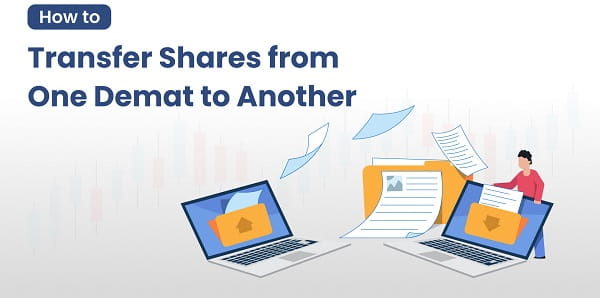
What is a Demat Share Transfer?
A Demat share transfer is the process of electronically moving securities — equity shares, bonds, ETFs, or mutual fund units held in Demat form — from one Beneficiary Owner (BO) account to another. Transfers can occur between accounts held with the same depository (intra-depository transfer) or between CDSL and NSDL accounts (inter-depository transfer). Both the transferring and receiving accounts must be valid, KYC-compliant Demat accounts. Unlike selling shares, transfers do not involve stock exchange transactions — securities move directly between Demat accounts without market intermediation.
Quick Overview Table — Share Transfer Methods
| Method | Mode | Time Required | Charges | Best For |
| CDSL EASIEST Portal | Online | Same day to T+1 | ₹25–₹30 per ISIN | CDSL to CDSL transfers |
| NSDL SPEED-e Portal | Online | Same day to T+1 | ₹25–₹30 per ISIN | NSDL to NSDL transfers |
| Delivery Instruction Slip (DIS) | Offline | 2–5 working days | ₹25–₹50 per instruction | All transfer types |
| Inter-depository Transfer | Online / Offline | 3–5 working days | ₹25–₹30 per ISIN | CDSL to NSDL and vice versa |
| CDSL Easiest App | Mobile | Same day | ₹25–₹30 per ISIN | CDSL account holders |
Types of Demat Share Transfers
Off-Market Transfer: The most common type — shares move directly between two Demat accounts without stock exchange involvement. Used for consolidation, gifting, and broker switching. No market price transaction occurs — transfer value is recorded at the agreed or book value.
Inter-Depository Transfer: Transfer between a CDSL account and an NSDL account — requires additional processing as the securities must cross depository boundaries.
On-Market Transfer: Involves the stock exchange settlement mechanism — typically used for pledging, margin purposes, and settlement-related transfers.
Method 1: Online Transfer Through CDSL EASIEST Portal
The CDSL EASIEST (Electronic Access to Securities Information and Execution of Secured Transactions) online portal is the most efficient method for CDSL to CDSL account transfers.
Step 1 — Register on CDSL EASIEST: Visit easiest.cdslindia.com and click on Register. Enter your 16-digit BO ID (Demat account number), registered mobile number, and PAN. Enter the OTP sent to your registered mobile. Accept terms and set a password to complete registration.
Step 2 — Add Target Account: After logging in, navigate to Setup and select Add Beneficiary. Enter the target Demat account’s BO ID and confirm through OTP verification. Wait 24 hours for the beneficiary account to be activated — CDSL imposes this security cooling period.
Step 3 — Initiate Transfer: Go to Transaction and select Transfer Instruction. Select the beneficiary account you added. Enter the ISIN (International Securities Identification Number) of the shares to transfer — ISIN is visible in your current holdings. Enter the quantity to transfer. Select execution date. Verify all details and confirm with OTP. The transfer is processed within same day to T+1 business day.
Method 2: Online Transfer Through NSDL SPEED-e Portal
For NSDL account holders, the NSDL SPEED-e portal provides equivalent online transfer functionality.
Step 1 — Registration: Visit nsdlspeed.com and register using your DP ID, Client ID, PAN, and registered email. Set up login credentials after OTP verification.
Step 2 — Add Beneficiary: Navigate to Beneficiary Master and add the target account’s DP ID and Client ID. Submit the addition request — it activates after 24 hours.
Step 3 — Submit Transfer: Go to Transfer Instructions and select Delivery Out. Choose the beneficiary, enter ISIN, quantity, and settlement date. Authenticate with your digital signature or TPIN and submit. NSDL processes same-day instructions submitted before the cut-off time of 4:00 PM on business days.
Method 3: Offline Transfer Using Delivery Instruction Slip (DIS)
The Delivery Instruction Slip is a physical paper form — similar to a cheque — provided by your DP or broker to authorise share transfers. This method works for all transfer types including inter-depository transfers between CDSL and NSDL.
Step 1 — Obtain DIS Booklet: Contact your broker or DP and request a DIS booklet. Most brokers provide this free or for a nominal charge. Each slip has a unique serial number for security.
Step 2 — Fill the DIS Correctly: Enter the target account’s DP ID and Client ID precisely — errors cause rejection. Enter the ISIN number, security name, and quantity for each security to transfer. For inter-depository transfers, enter the 16-digit CDSL account number or the NSDL DP ID and Client ID appropriately. Sign the DIS exactly as per your Demat account records — signature mismatch is the most common rejection reason.
Step 3 — Submit to Your DP: Submit the completed and signed DIS to your DP’s branch or designated submission address. Keep a photocopy of every submitted DIS for your records. Processing time is 2–5 working days depending on the DP’s processing schedule.
Charges for Share Transfer
Share transfer charges vary by DP and transfer type. Most brokers charge ₹25–₹50 per ISIN per transfer instruction — meaning transferring 5 different securities in one DIS or online instruction incurs 5 separate charges. Some brokers waive or reduce charges for transfers made during account closure. GST at 18% applies on transfer service charges. There is no Securities Transaction Tax (STT) on off-market transfers as these do not involve exchange-executed trades.
Tax Implications of Share Transfer
Off-market share transfers between different individuals are treated as gifts or sales for tax purposes. Transfers between your own two Demat accounts with the same PAN have no tax implication — cost of acquisition and holding period remain unchanged. Transfers as gifts to non-relatives exceeding ₹50,000 in value are taxable as income in the recipient’s hands. When gifted shares are eventually sold, the original acquisition date and cost determine capital gains — preserving long-term capital gains treatment if the original holding qualifies.
Common Mistakes to Avoid
Never submit a DIS without retaining a photocopy — lost DIS instructions are difficult to trace without documentation. Always verify the target account’s DP ID and Client ID before submission — incorrect account details result in rejected or misdirected transfers. Ensure the quantity transferred does not exceed settled holdings — pending T+1 settlements cannot be transferred. Always match your signature precisely with the DP’s records to prevent rejection.
Frequently Asked Questions (FAQs)
Q: How long does a Demat share transfer take?
A: Online transfers through CDSL EASIEST or NSDL SPEED-e complete same day to T+1 business day. Offline DIS transfers take 2–5 working days. Inter-depository transfers take 3–5 working days.
Q: Can I transfer shares from CDSL to NSDL?
A: Yes — inter-depository transfers are possible through DIS submission or online portals. The process takes slightly longer than same-depository transfers due to inter-depository coordination.
Q: Is there any tax on transferring shares between my own two accounts?
A: No — transfers between your own Demat accounts with the same PAN have no tax implication. Cost of acquisition and holding period carry forward unchanged.
Q: What is the charge for transferring shares between brokers?
A: Typically ₹25–₹50 per ISIN from your current DP plus applicable GST. Some brokers charge nothing for account closure transfers. Check with your specific DP for their fee schedule.
Q: Can I transfer mutual fund units through the same process?
A: Mutual fund units held in Demat form can be transferred through DIS. Direct mutual fund units held in AMC folios require a different folio transfer process through the AMC directly.