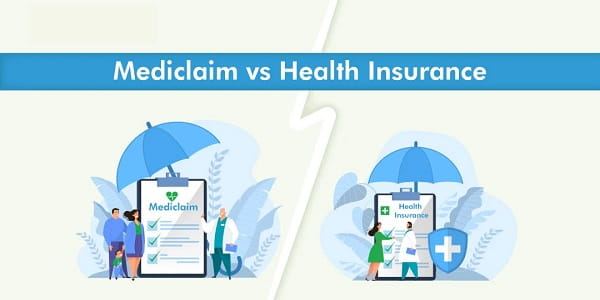
Mediclaim and health insurance are terms that most Indians use interchangeably — creating genuine confusion about product selection that sometimes results in inadequate coverage. The distinction matters practically because these terms describe products with different coverage scopes, and choosing the right one for your specific healthcare risk profile requires understanding precisely what each covers and what it does not.
Quick Overview Table — Mediclaim vs Health Insurance
| Parameter | Mediclaim | Health Insurance |
| Coverage Scope | Hospitalisation expenses only | Comprehensive — hospitalisation + OPD + critical illness + more |
| Nature | Basic indemnity — reimburses hospital bills | Indemnity + benefit-based options |
| Pre-Hospitalisation | Typically 30 days | Typically 30–60 days |
| Post-Hospitalisation | Typically 60 days | Typically 60–90 days |
| OPD Coverage | Generally not included | Available in comprehensive plans |
| Critical Illness Cover | Not typically included | Available as rider or standalone |
| Daycare Procedures | Increasingly included | Included |
| Mental Health Coverage | Limited | Available in comprehensive plans |
| Premium | Lower | Higher — reflects broader coverage |
| Best For | Basic hospitalisation protection | Comprehensive healthcare financial security |
What is Mediclaim?
Mediclaim is India’s original, simplest form of health insurance — an indemnity-based hospitalisation policy that reimburses actual medical expenses incurred during hospitalisation. The term “mediclaim” originated with the New India Assurance Company’s 1986 Mediclaim policy — India’s first retail health insurance product — and has since become a generic term for basic hospitalisation covers.
A standard mediclaim policy covers inpatient hospitalisation expenses — room charges, surgeon fees, anaesthesia, OT charges, ICU costs, medicines during hospitalisation, and diagnostics conducted during hospital stay. The policy reimburses actual bills subject to the sum insured limit — it does not provide fixed cash benefits but pays actual expenses incurred.
Mediclaim policies are straightforward — a defined sum insured, a clear hospitalisation trigger, and reimbursement or cashless settlement through network hospitals. Most employer-provided group health covers are essentially mediclaim policies.
What is Health Insurance?
Health insurance is a broader category encompassing all insurance products covering health-related financial risks — including but not limited to hospitalisation. Modern health insurance plans extend well beyond the basic mediclaim scope to include OPD consultation coverage, diagnostic test reimbursement, mental health treatment, maternity benefits, critical illness lump-sum payments, home hospitalisation, organ donor expenses, and international treatment coverage.
Comprehensive health insurance products from insurers like Star Health, HDFC ERGO, Niva Bupa, and ICICI Lombard combine the traditional mediclaim hospitalisation coverage with these additional benefit layers — creating complete healthcare financial security that addresses the full spectrum of medical expenses rather than only the hospitalisation component.
Practical Difference for Coverage Decisions
The practical implication is straightforward — every mediclaim is health insurance, but not every health insurance is a mediclaim. A basic mediclaim leaves significant healthcare cost exposure uncovered — the growing proportion of medical spending occurring outside hospitalisation through OPD consultations, regular diagnostics, dental care, and mental health treatment.
Comprehensive health insurance addresses this gap. The premium differential between basic mediclaim and comprehensive health insurance is typically 20–40% — a meaningful but justifiable additional cost given the substantially broader financial protection delivered.
Which Should You Choose?
For basic affordable hospitalisation protection with minimum premium outlay — a mediclaim policy provides core coverage. For comprehensive healthcare financial security addressing the full spectrum of modern medical expenses — comprehensive health insurance is worth the additional premium. Given India’s rapidly rising medical costs and the increasing proportion of health spending occurring outside hospitalisation, comprehensive health insurance is increasingly the appropriate choice for most households.
Frequently Asked Questions (FAQs)
Q: Is mediclaim enough for a family in India?
A: Mediclaim covers hospitalisation but misses OPD, diagnostics, and critical illness costs that represent growing proportions of healthcare spending. Comprehensive health insurance is more complete.
Q: Can I have both mediclaim and health insurance?
A: Yes — a basic mediclaim for hospitalisation plus a critical illness rider or OPD cover creates layered protection.
Q: Is group mediclaim from employer sufficient?
A: Employer covers typically have limitations on sum insured, dependent coverage, and portability. A personal individual or family floater policy supplements group cover.
Q: Does mediclaim cover pre-existing diseases?
A: After a waiting period — typically 2–4 years — pre-existing conditions are covered under most mediclaim and health insurance policies.
Q: What is the difference between cashless mediclaim and reimbursement mediclaim?
A: Cashless mediclaim settles bills directly with network hospitals. Reimbursement mediclaim requires paying bills upfront and claiming later. Both are available under most policies.